
NAD+ shows up in supplement ads, IV drip menus, and longevity podcasts, usually with a lot of excitement attached. Underneath the marketing, it is something less dramatic and more fundamental: a molecule your cells use every second of the day.
This page explains what NAD+ is, what it does, and what is still unsettled, without the hype. If you want the full rundown on the injection format specifically, start with the NAD+ injections guide. For related topics, browse the healthy aging section or the full Learn hub.
What is NAD+ in plain language?
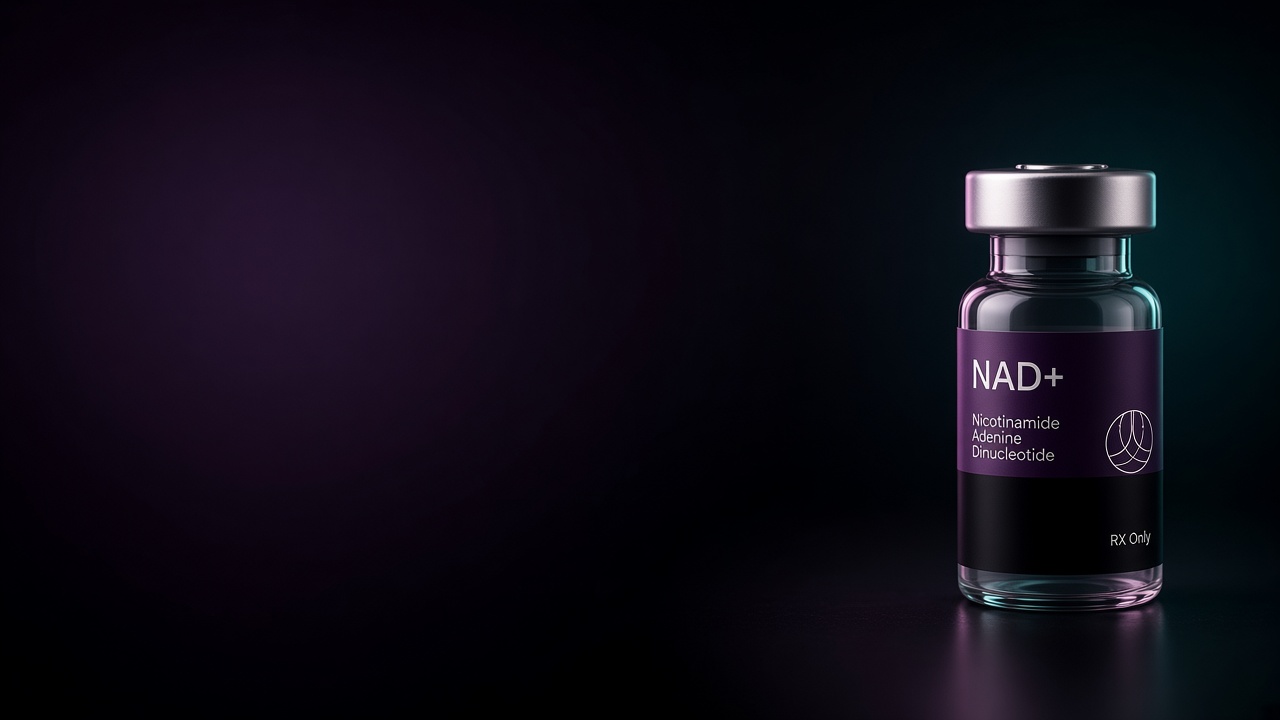
NAD+ stands for nicotinamide adenine dinucleotide. It is a coenzyme, which means it is a helper molecule that enzymes need in order to finish a chemical reaction. Without the helper, the reaction stalls.
Think of an enzyme as a machine on a factory floor and NAD+ as a shuttle that carries parts between machines. The shuttle is not the product. It is not the machine either. It is the thing that keeps the line moving.
NAD+ exists in every cell you have, in bacteria, in plants, and in nearly every living thing that has been studied. That universality is a good sign that it matters. It is not, on its own, a reason to inject more of it.
What does NAD+ actually do in your cells?
The best-documented job is energy metabolism. When your cells break down carbohydrates, fat, and protein, NAD+ accepts electrons from those reactions and carries them to the mitochondria, where they help produce ATP, the energy currency your cells spend.
NAD+ also acts as a raw material, not just a shuttle. Certain enzyme families, including sirtuins and PARPs, consume NAD+ while doing their work. Those enzymes are involved in DNA repair, in how genes are switched on and off, and in how cells respond to stress.
That second role is why NAD+ became a longevity talking point. If enzymes tied to repair and stress response use NAD+ as fuel, the reasoning goes, then having less of it could matter. It is a reasonable hypothesis. It is not the same as a demonstrated outcome in humans.
Do NAD+ levels really drop as you get older?
This is the claim you see most often, usually beside a steep red graph. The honest version is more measured.
Studies in animals and in human tissue samples suggest NAD+ concentrations are often lower in older subjects, in some tissues, using some measurement methods. Skin, liver, muscle, and brain have each been examined separately, and the numbers do not always agree.
What does not exist is a standard, validated clinical test that tells you your NAD+ level today. If a program offers to measure your NAD+ and then sell you the fix, ask what the assay is, what a normal range looks like, and who validated it. Precise numbers attached to vague methods should slow you down.
Age is also not the only variable in the conversation. Sleep, alcohol, illness, inflammation, and overall metabolic health all interact with these pathways, and none of them are solved by a vial.
Where does your body get NAD+?
Your body builds its own supply through several routes. The salvage pathway recycles nicotinamide, a breakdown product of NAD+, back into fresh NAD+. This recycling loop handles most of your daily turnover.
You also take in precursors through food. Niacin and other forms of vitamin B3 appear in meat, fish, poultry, legumes, seeds, and fortified grains. Tryptophan, an amino acid, can be converted into NAD+ through a longer route.
Supplements add two more precursors to the menu: nicotinamide riboside, or NR, and nicotinamide mononucleotide, or NMN. Those are chemically distinct from NAD+ itself, which matters more than the marketing usually admits. The comparison is worked through in detail in NAD+ vs NMN.
What is the difference between NAD+ and NADH?
NAD+ and NADH are the same molecule in two states. NAD+ is the oxidized form, meaning it has room to accept electrons. NADH is the reduced form, meaning it is carrying them.
Your cells constantly convert one into the other. The ratio between the two is a meaningful signal about what a cell is doing metabolically, which is part of why researchers study it so carefully.
For a consumer, the practical takeaway is small but useful: a product labeled NAD+ is referring to the oxidized form. The label is describing chemistry, not potency, and not quality.
Why do wellness companies sell NAD+ products?
Because the underlying science is genuinely interesting and the regulatory space around wellness is loose. Compelling cell biology plus permissive marketing rules is a reliable formula for overstatement.
The pattern to watch for is a leap. A company describes a real mechanism, such as sirtuins consuming NAD+, and then jumps directly to a promised human result, such as feeling a decade younger. The mechanism can be true while the promise remains unsupported.
Human trials of NAD+ precursors have generally shown that oral supplements can raise measurable NAD+ markers in blood. What those trials have been less able to show is a consistent, meaningful change in how people feel or function. That gap is the entire debate, and it is worth knowing about before you spend money.
How do NAD+ injections fit into all of this?
Transparent Meds offers NAD+ in one format only: a subcutaneous injection you administer at home after instruction. There is no oral or nasal version in our program, and comparisons to those formats on this site are educational rather than a sales pitch for something we sell.
The NAD+ used in our program is compounded by a state-licensed 503A pharmacy. Compounded medications are not FDA-approved, which means the FDA has not reviewed them for safety, effectiveness, or quality. Prescription required.
An injection bypasses digestion, and that is a real pharmacological difference from a capsule. It is not automatically an advantage for any particular goal, because the studies comparing formats head to head in people are thin. If energy is the outcome you care about most, the realistic expectations are covered in NAD+ for energy and fatigue.
What should you ask before starting an NAD+ program?
Start with the basics that any legitimate program can answer without hesitating.
- Which pharmacy compounds the product, and is it state-licensed?
- What is the concentration in the vial, and what dose was prescribed for you?
- What does the monthly price include, and what happens when the dose changes?
- What outcome will you track, over what time frame?
- When would you stop if nothing changes?
That last question is the one most people skip. Deciding in advance what "not working for me" looks like protects you from paying indefinitely for a subjective maybe. If you want the pricing math spelled out, see what NAD+ injections cost, and review the Transparent Meds healthy-aging program before you commit.
Finally, bring your full medication and supplement list to the provider conversation, including things you bought online. Fatigue that is new, severe, or unexplained deserves a real workup, not a wellness product. Prescription required.
Frequently asked questions
What does NAD+ stand for?
NAD+ stands for nicotinamide adenine dinucleotide. It is a coenzyme found in every cell in your body, and it participates in the chemical reactions that turn nutrients into usable energy.
Is NAD+ a vitamin?
No. NAD+ is a coenzyme your body builds, partly from forms of vitamin B3 in food. Vitamin B3 is a building block, while NAD+ is the finished molecule your cells use.
Do NAD+ levels drop with age?
Research suggests NAD+ levels in some tissues tend to be lower in older adults, but measurements vary by tissue and method. There is no routine blood test that tells you your personal NAD+ status.
Can you get NAD+ from food?
Your body makes NAD+ using dietary precursors such as niacin and other B3 forms found in meat, fish, legumes, and fortified grains. Food supplies raw material rather than NAD+ itself.
Are NAD+ injections regulated?
Compounded NAD+ injections are not FDA-approved, which means the FDA has not reviewed them for safety, effectiveness, or quality. They require a prescription from a licensed provider.
Keep learning
Transparent care
Talk to a licensed provider
See whether the healthy aging program may fit your goals, then review pricing before you decide. Prescription required.
View program details