
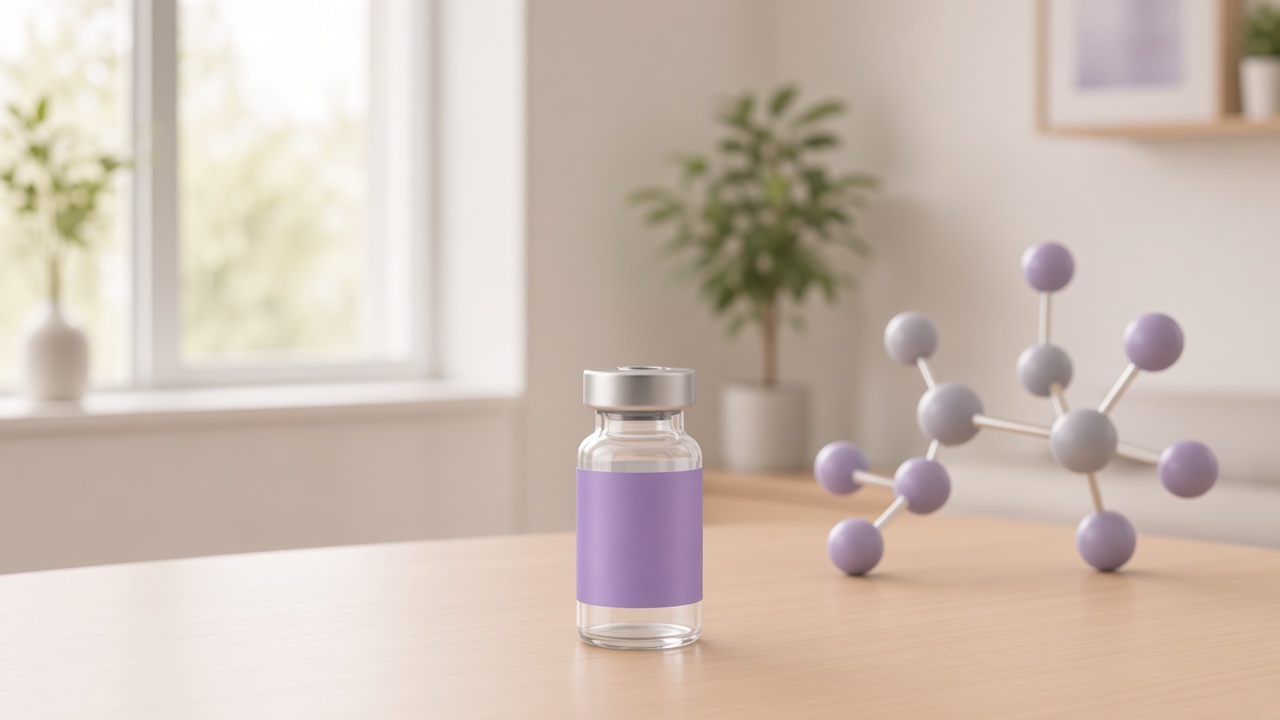
Sermorelin comes up constantly in online conversations about sleep, recovery, and aging. Those conversations usually skip the basic question: what is it, actually?
This article answers that in plain language. No hype and no promises — just what the peptide is, how providers use it, what it costs, and what a legitimate program looks like.
For the wider overview, read the complete sermorelin guide. For more plain-language articles, visit the Learn hub or the hormone health section.
What is sermorelin, exactly?
Sermorelin is a synthetic copy of the first 29 amino acids of growth hormone-releasing hormone, usually shortened to GHRH. That fragment is the part of the natural molecule that carries the signal. On a pharmacy label you may see it written as sermorelin acetate.
It is a peptide, not a hormone replacement and not a supplement. A peptide is a short chain of amino acids — smaller than a protein, long enough to act as a message. Sermorelin's role is to ask the pituitary gland to do something it already does on its own: release growth hormone in pulses.
Transparent Meds programs use sermorelin compounded by a state-licensed 503A pharmacy. Compounded medications are not FDA-approved, which means the FDA has not reviewed them for safety, effectiveness, or quality. Prescription required.
How does sermorelin work in the body?
Your hypothalamus releases GHRH. That signal travels a short distance to the pituitary gland, which responds by releasing growth hormone into the bloodstream. Growth hormone then acts on the liver and other tissues, including through a second messenger called IGF-1.
Sermorelin binds to the receptors that GHRH uses. The intent is to work through your existing signaling system rather than deliver growth hormone from the outside.
That is a real difference, but it is worth being careful with it. "Works with your body" does not mean "risk free." Any prescription that touches a hormone pathway deserves a proper screening, clear instructions, and follow-up.
What does "compounded" actually mean here?
There is no mass-manufactured sermorelin product sitting on a wholesaler's shelf. Instead, a compounding pharmacy prepares it for individual patients against a prescription.
A 503A pharmacy is licensed by its state board of pharmacy and compounds for specific patients rather than producing commercial stock. That is a real regulatory category with real oversight, but it is not the same oversight a mass-market drug goes through.
The practical consequence: the FDA has not reviewed your vial for safety, effectiveness, or quality. You are relying on the pharmacy's standards, its sterility practices, and your provider's judgment. That is exactly why knowing which pharmacy dispenses your medication matters, and why any seller who will not name theirs should lose your business.
Is sermorelin the same thing as HGH?
No, and this is the single most common mix-up. HGH products contain growth hormone itself. Sermorelin does not contain growth hormone at all — it contains a signal that asks your pituitary to release its own.
The two also differ in how they are regulated, how they are dosed, how they are monitored, and what risks come with them. A claim you read about prescribed HGH does not automatically transfer to compounded sermorelin.
Marketing language like "HGH alternative" blurs all of that. We break the comparison down properly in sermorelin vs HGH.
Why does sermorelin require a prescription?
Because it acts on a hormone pathway, and hormone pathways are not one-size-fits-all. A provider needs to know your age, symptoms, medical history, current medications, and whether anything in your history makes this a poor fit.
Screening topics usually include pregnancy or breastfeeding, any cancer history or active cancer care, pituitary conditions, diabetes, thyroid function, and other hormone-related care you are already receiving.
Anyone selling sermorelin without a clinical evaluation is skipping the step that makes it a medication rather than a gamble. That is a reason to walk away, not a convenience.
What does a sermorelin program usually include?
A real program is more than a vial in a box. You should expect an intake questionnaire, a licensed provider reviewing your answers, a named dispensing pharmacy, written instructions, and a way to reach the care team between refills.
The medication itself typically arrives as a small vial that needs refrigeration. Depending on the pharmacy, it may come ready to use or require preparation according to its own instructions. Your label states the concentration and the amount you were prescribed.
Injection supplies, cold shipping, and a sharps container may be included or billed separately. Ask before you pay, because that is where advertised prices and real prices tend to diverge.
Who do providers consider sermorelin for?
Adults typically ask about sermorelin for sleep quality, recovery after exercise, energy, and body composition. Those are the goals people bring in. They are not outcomes anyone can promise you.
Each of those concerns also has other explanations that are easier to address. Poor sleep can come from schedule, alcohol, stress, pain, or sleep apnea. Low energy can trace back to nutrition, thyroid function, anemia, medication side effects, or mood. A careful intake looks at those first.
Evidence for compounded sermorelin in general adult wellness is limited. Some people report subjective changes; others notice nothing. We walk through what the realistic expectations look like in sermorelin benefits.
What does sermorelin cost?
Transparent Meds lists sermorelin at $199 per month, reduced from a $229 regular price. That figure covers the program as described on the hormone health program page, and we would rather you compare it against other options than take it on faith.
When you compare, ask every provider the same four questions: is the medication included, does the price change with dose, which pharmacy dispenses it, and are labs required at extra cost. A low headline number is often an intake fee with the medication billed separately.
For a fuller cost breakdown and what to watch for in online pricing, see sermorelin cost online.
How do you get sermorelin legally?
Through a licensed provider and a licensed pharmacy. That is the whole list. The process usually runs: intake questionnaire, provider review, prescription if appropriate, pharmacy dispensing, shipment with cold packs, then a check-in.
You will also see sermorelin sold online as a "research chemical," labeled not for human use. Those sellers exist specifically to route around the prescription requirement. There is no clinician deciding whether it suits you, no pharmacy answerable for sterility or potency, and nobody to call if something goes wrong.
The price difference is real, and so is the reason for it. If you are weighing that trade-off, we go through it in detail in sermorelin cost online.
What should you ask before starting?
Bring specific questions to your provider rather than a list of hoped-for results. Useful ones include: what are you hoping this does for me, how will we know whether it is working, what side effects should I watch for, and when do we stop if nothing changes?
Also ask about practical details. How is the vial stored, what is the beyond-use date, what happens if I miss a dose, and who do I contact if a shipment arrives warm or damaged?
A provider who answers those directly — including the parts where the evidence is thin — is giving you what you need to make a real decision. Prescription required.
Frequently asked questions
What is sermorelin in simple terms?
Sermorelin is a lab-made copy of part of growth hormone-releasing hormone. It acts as a signal that asks your pituitary gland to release more of your own growth hormone.
Is sermorelin a steroid?
No. Sermorelin is a peptide, which is a short chain of amino acids. It is not an anabolic steroid and it is not testosterone.
Do you need a prescription for sermorelin?
Yes. A licensed provider has to evaluate you and decide whether sermorelin is appropriate before a pharmacy can dispense it.
Is compounded sermorelin FDA-approved?
No. Compounded sermorelin is not FDA-approved, which means the FDA has not reviewed it for safety, effectiveness, or quality.
How is sermorelin taken?
It is usually a small subcutaneous injection, often taken at night. Your prescription label and pharmacy instructions set the dose, timing, and storage rules.
Keep learning
Transparent care
Talk to a licensed provider
See whether the hormone health program may fit your goals, then review pricing before you decide. Prescription required.
View program details