
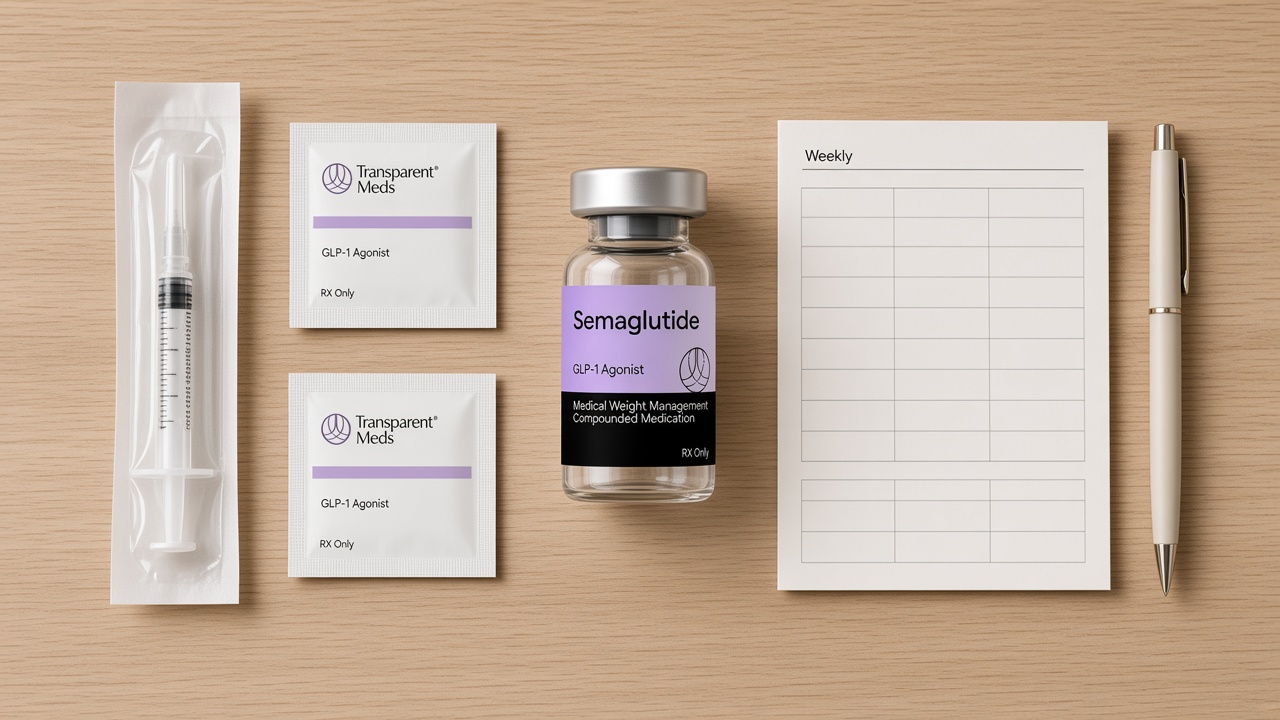
A GLP-1 dosage chart can explain the idea of gradual increases, but it cannot set your dose. Your prescription label and provider instructions are the only schedule you should follow. This is especially important for compounded vials because concentrations and syringe-unit directions can differ.
Titration means adjusting a dose in steps. The purpose is to observe response and tolerability before deciding whether to move higher. A provider may hold, delay, lower, or stop a dose instead of following a calendar automatically.
For medication basics, read the complete GLP-1 weight loss guide. You can browse more resources in the Learn hub and weight loss section.
What does a GLP-1 titration schedule do?
A titration schedule gives the body time to adjust and gives the provider time to review appetite changes, side effects, eating, hydration, and other health information. Starting low and changing in steps may make digestive symptoms easier to assess.
The next step is not automatic. If nausea, vomiting, constipation, diarrhea, or difficulty eating is significant, a provider may keep the dose steady longer or change the plan. If response is subtle, the provider still considers whether enough time has passed before increasing.
Titration is not a race toward the largest number. The appropriate dose is the one prescribed after reviewing your experience, not the highest step shown on a general chart.
What does a common semaglutide chart show?
Educational semaglutide schedules often show gradual steps spaced at least several weeks apart. One commonly referenced pattern is:
| Stage | Weekly amount often shown in general references |
|---|---|
| Starting stage | 0.25 mg |
| Next stage | 0.5 mg |
| Later stages | 1 mg, then 1.7 mg |
| Highest stage in some schedules | 2.4 mg |
This table is not a prescription. The available stages, timing, and appropriate stopping point depend on the exact product, clinical context, response, and provider instructions. A compounded formulation may also use a different concentration than one you have seen online.
Never advance because four weeks have passed unless your provider has instructed you to do so.
What does a common tirzepatide chart show?
Educational tirzepatide schedules often begin at 2.5 mg weekly and show increases in 2.5 mg steps after at least several weeks:
| Stage | Weekly amount often shown in general references |
|---|---|
| Starting stage | 2.5 mg |
| Next stage | 5 mg |
| Later stages | 7.5 mg, 10 mg, 12.5 mg |
| Highest stage in some schedules | 15 mg |
This is not a personal dosing instruction. A provider may hold at a stage, delay an increase, choose another step, or stop the medication. Do not use this table to fill a syringe because it does not state your vial concentration.
Semaglutide and tirzepatide milligrams are not equivalent. There is no direct conversion between the schedules.
Why are milligrams and syringe units different?
Milligrams measure the amount of active ingredient. Syringe units measure liquid volume. Concentration tells you how many milligrams are in a given volume, which is why the same dose can require different unit markings from different vials.
For example, two vials can carry the same medication name but have different milligrams per milliliter. Drawing the same number of units from both could deliver different medication amounts. That is why a chart without concentration cannot tell you where to fill a syringe.
Ask the pharmacy to confirm three values together: prescribed milligrams, vial concentration, and corresponding syringe units. Write them down exactly as provided.
Why might a provider hold a dose?
A provider may hold a dose when it is producing a workable response, when side effects would make an increase difficult, or when more observation is needed. Staying at a lower stage is not a failure.
Tell the provider about hunger, fullness, meal intake, fluids, bowel habits, energy, and any symptoms. Mention whether a side effect interferes with work, sleep, exercise, or normal activities. This context matters more than simply saying the dose feels “strong” or “weak.”
The GLP-1 side-effects management guide can help you prepare a useful report before a follow-up.
What happens when a dose increases?
You may notice a change in appetite, fullness, or digestive symptoms after an increase. Plan smaller familiar meals, drink fluids steadily, and avoid making several major diet changes at the same time. That makes patterns easier to identify.
Record the injection date, prescribed dose, syringe units, injection site, and symptoms. Contact your provider if symptoms are persistent, worsening, or make normal eating and drinking difficult.
Do not take more because an increase feels subtle. The medication remains on a weekly schedule as prescribed, and response can unfold over time. The GLP-1 timeline guide explains why one injection does not define the experience.
How should you handle a new vial or concentration?
Compare the new label with the old one before injecting. Check the active ingredient, concentration, dose in milligrams, unit directions, beyond-use date, and storage instructions. A refill can look similar while requiring a different volume.
If any value changed or the unit directions are missing, contact the pharmacy. Do not transfer a previous vial's unit markings to the new vial. Do not rely on memory or a photo of someone else's label.
The GLP-1 injection guide covers setup, site rotation, storage, and sharps disposal. Ask the pharmacy for a demonstration if you cannot confidently read the syringe.
What should you do after a missed dose?
Follow the missed-dose instructions attached to your prescription. The allowed timing can depend on the product and how much time has passed. If the directions are unclear, contact the care team before injecting.
Do not double a later dose or shorten the interval on your own. If you miss more than one dose, your provider may want to reassess the restart amount rather than sending you directly back to the previous stage.
Tell the provider about illness, travel, a procedure, side effects, or a refill delay that caused the gap. That information can affect the next instruction.
Can you switch between semaglutide and tirzepatide doses?
There is no do-it-yourself conversion. They are different active ingredients that act on different pathways. Your previous milligram dose does not tell you the starting dose of the other medication.
A licensed provider may consider the reason for switching, prior dose, time since the last injection, side effects, other prescriptions, and health history. You should receive a new label and clear written instructions.
Never combine leftover medication, alternate products, or use both unless a licensed provider has explicitly prescribed and explained that plan. Discard supplies according to pharmacy and local guidance.
What disclosures apply to compounded dosing?
Transparent Meds may offer compounded semaglutide for $99 per month and compounded tirzepatide for $199 per month. These medications are compounded by a state-licensed 503A pharmacy. They are not FDA-approved. Prescription required.
A compounded medication is prepared for an individual prescription and can differ in concentration, packaging, and instructions. It is not a generic product reviewed in the same way as a brand-name medication.
Keep the medication in its original labeled packaging. Save the dispensing pharmacy's contact information and call when a label, concentration, shipment, or syringe direction is unclear.
What information should you bring to a dose review?
Bring your injection log, current vial or a clear photo of its label, a list of other prescriptions and supplements, and notes about appetite, meals, fluids, bowel habits, and side effects. Include missed doses or errors.
Ask why the provider recommends holding or changing the dose, what to watch for next, and when follow-up occurs. Confirm the new instructions in both milligrams and syringe units before ending the visit.
You can review Transparent Meds weight loss program details and current pricing if you are considering an evaluation. A chart can teach vocabulary, but your provider and pharmacy must supply the actual dosing plan.
What is the safest way to use a dosage chart?
Use a chart to understand the concept of gradual titration and to prepare questions. Do not use it to prescribe, convert medications, fill a syringe, or override your label.
Verify the active ingredient, concentration, milligram dose, syringe units, injection day, and next review date every time instructions change. Pause and ask when two sources disagree.
Clear dosing is a shared process between you, the prescriber, and the dispensing pharmacy. No online table has enough information to replace that process.
What should you do after a possible dosing error?
Do not take another injection to correct the mistake. Set the vial and supplies aside, note the amount you intended to use and the amount you may have used, and contact the care team, dispensing pharmacy, or poison control as directed.
Have the label available. Report the active ingredient, concentration, syringe size, unit marking, injection time, and any symptoms. If severe symptoms develop, call emergency services and bring the labeled medication when possible.
After the immediate question is resolved, ask the pharmacy to review the directions with you. A written milligram-to-unit instruction, appropriate syringe, good lighting, and injection log can reduce future confusion. Never hide an error because you feel embarrassed; accurate details help clinicians respond appropriately.
Prescription required.
Frequently asked questions
What does titration mean?
Titration is the step-by-step adjustment of a dose over time. A provider uses response, side effects, and your health information to decide whether to change it.
Are semaglutide and tirzepatide doses interchangeable?
No. They are different active ingredients with different dosing schedules. Do not convert or switch without new instructions from a licensed provider.
Are milligrams the same as syringe units?
No. Milligrams state the medication amount, while syringe units state liquid volume. Product concentration determines how they relate.
Do you have to increase the dose every four weeks?
Not necessarily. A provider may hold, delay, lower, or stop a dose based on your response and tolerability.
What should you do if your vial concentration changes?
Pause and confirm the new milligram-to-unit directions with the pharmacy before injecting. Do not reuse unit markings from the previous vial.
Keep learning

Transparent care
Talk to a licensed provider
See whether the weight loss program may fit your goals, then review pricing before you decide. Prescription required.
View program details