
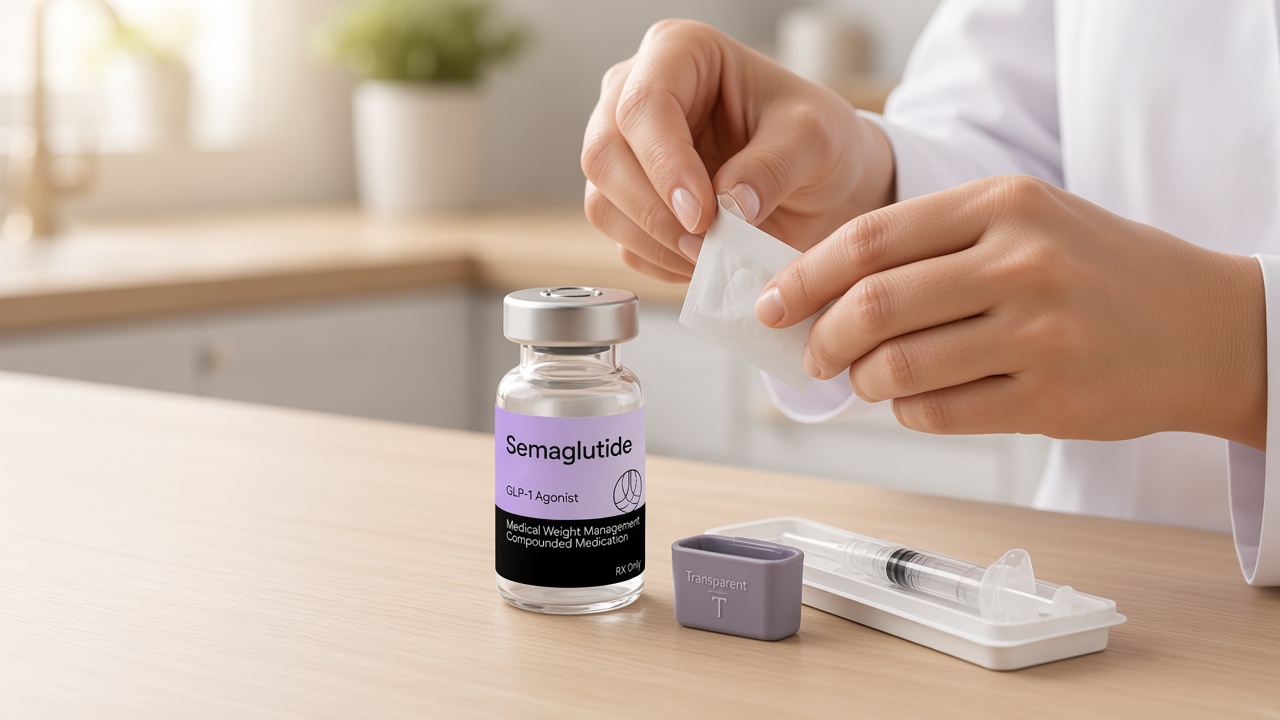
A GLP-1 injection is usually given into the fatty tissue just under the skin. The basic process is short, but the details matter: your medication, concentration, prescribed dose, syringe, storage directions, and missed-dose instructions are specific to what the pharmacy dispensed.
Use this article as an orientation, not as a replacement for the instructions that come with your prescription. Ask your pharmacy or care team to walk you through the first dose if anything is unclear.
The complete GLP-1 guide explains how injections fit into broader care. You can also browse the Learn hub and weight loss section.
What should you check before an injection?
Read the pharmacy label every time. Confirm your name, active ingredient, concentration, prescribed dose, injection schedule, storage directions, and beyond-use date. Make sure you understand both the dose in milligrams and the corresponding amount to draw into the syringe.
Inspect the vial or device. Do not use it if the seal is damaged, the medication looks unexpectedly cloudy or discolored, particles appear when they should not, or it arrived outside the required temperature range. Contact the dispensing pharmacy for guidance.
Gather the medication, a new sterile syringe and needle, an alcohol wipe, clean gauze if needed, and an appropriate sharps container. Wash your hands and use a clean, well-lit surface away from children and pets.
Where can you give a GLP-1 injection?
Common subcutaneous sites include the abdomen, front of the thigh, and back of the upper arm. Follow the site instructions supplied for your product. The upper arm can be difficult to reach correctly by yourself, so ask the care team whether another site is more practical.
Avoid skin that is bruised, hard, tender, scarred, irritated, infected, or affected by a rash. Do not inject through clothing. If you use the abdomen, follow the distance guidance in your instructions rather than placing the injection too close to the navel.
Your provider may give different instructions based on your body, another injectable medication, surgery, or skin concerns. Ask before choosing a site that was not listed.
Why should you rotate injection sites?
Rotation means moving to a different appropriate area or a different spot within that area. Repeatedly using the exact same location can irritate the tissue and cause lumps, tenderness, or skin changes.
Use a simple pattern. You might alternate thighs and abdomen areas or move clockwise among approved spots. Record the site with the injection date if remembering is difficult.
Rotation does not mean using a questionable area just because it is next in the pattern. Skip irritated, bruised, scarred, or painful skin. Contact your provider if a reaction spreads, becomes hot, drains, or does not improve.
How do you draw medication from a vial?
Follow the pharmacy's exact instructions. In general, you clean the vial stopper, allow it to dry, remove the syringe cap without touching the needle, and draw the prescribed liquid amount. Some instructions include drawing air into the syringe before entering the vial.
Check the syringe at eye level. If you see large air bubbles or cannot identify the correct marking, pause and review the instructions. Do not guess. The number of units depends on concentration, so a dose shown in someone else's video may be wrong for your vial.
Never share vials, syringes, or needles. Use a new sterile needle and syringe each time. If the needle touches an unclean surface, replace it rather than wiping and reusing it.
How do you give the injection?
Clean the chosen site as instructed and let the skin dry. Hold the syringe securely. Depending on the needle and your instructions, you may gently pinch a fold of skin and insert at the directed angle. Push the plunger steadily until the dose is delivered.
Remove the needle along the same path. Apply light pressure with clean gauze if there is a small drop of blood. Do not rub the area aggressively. A tiny spot of blood can happen, but ongoing bleeding, strong pain, or an unusual reaction should be reported.
Place the used needle and syringe directly into a sharps container. Do not recap it with two hands, leave it on a counter, or throw a loose needle into household trash.
What is the difference between milligrams and syringe units?
Milligrams describe the amount of active ingredient. Syringe units describe a volume of liquid. The concentration tells you how much medication is contained in that volume. Without the concentration, units cannot tell you the milligram dose.
This distinction is especially important with compounded medication because concentrations may differ. Twenty units from one vial may not contain the same milligram amount as twenty units from another vial.
Ask the pharmacy to write down three pieces of information together: prescribed milligrams, vial concentration, and matching syringe units. The GLP-1 dosage and titration guide explains these terms in more detail.
How should you store the medication?
Use the storage directions on the pharmacy label. Many injectable products require refrigeration, but temperature ranges and after-opening instructions can differ. Do not assume that advice for a brand-name pen applies to your vial.
Keep medication in its original labeled packaging and protect it from children, pets, direct light, and temperature extremes. Do not freeze it unless the label explicitly says to. If it freezes, becomes warm during shipping, or sits out longer than directed, contact the pharmacy before using it.
When traveling, ask how to maintain the required temperature and how airport screening affects supplies. Carry the prescription label and do not put medication or needles in loose, unlabeled containers.
What should you do after a missed or uncertain dose?
Check the written missed-dose instructions for your specific prescription. Timing rules vary. Do not double the next injection or add medication because you think some leaked out.
If you are unsure whether the full amount went in, note what happened and contact the care team. Tell them the medication name, concentration, prescribed dose, injection date, and what you observed. They can give instructions based on the actual product.
Set a repeating reminder and keep an injection log. If travel, illness, a procedure, or a refill delay may affect timing, ask in advance instead of adjusting the schedule yourself.
Which injection mistakes should you avoid?
Do not copy syringe units from an online chart, reuse a needle, share a vial, inject through clothing, skip label checks, or use medication with a damaged seal. Do not change the dose because appetite feels unchanged or because side effects are absent.
Avoid rushing. Most errors happen when the concentration is overlooked, the wrong syringe line is read, or the schedule is remembered incorrectly. Good lighting and a written log reduce confusion.
If an error occurs, contact the pharmacy or care team promptly. If you develop severe symptoms, call emergency services or poison control as directed. Bring the vial and label information when seeking care.
What should you know about compounded GLP-1 injections?
Transparent Meds may offer compounded semaglutide at $99 per month and compounded tirzepatide at $199 per month. These medications are compounded by a state-licensed 503A pharmacy. They are not FDA-approved. Prescription required.
Compounded medication can differ in concentration, packaging, and administration instructions from other products. It is not a generic product reviewed in the same way as a brand-name medication. Use only the directions attached to your prescription.
Ask for the dispensing pharmacy's contact information and save it. The pharmacy is an important source for questions about the vial, storage, appearance, concentration, supplies, and shipment condition.
When should you contact your provider?
Contact the care team for repeated injection-site reactions, significant pain, a dosing mistake, a damaged vial, missed doses, or uncertainty about technique. Also report nausea, vomiting, constipation, diarrhea, or other symptoms that are persistent or worsening.
Seek urgent help for symptoms of a serious allergic reaction, severe abdominal pain, fainting, confusion, or another symptom that feels dangerous. The GLP-1 side-effects guide provides a practical reporting checklist.
Food and fluids can affect how you feel around an injection. The guide to eating on a GLP-1 offers simple meal ideas. If you are considering care, review Transparent Meds weight loss options and pricing.
How should you dispose of needles and supplies?
Place each used needle and syringe directly into an appropriate sharps container. Keep the container upright, closed, and away from children and pets. Do not place loose sharps in household trash or recycling, and do not try to bend or break a needle.
Local disposal rules vary. A pharmacy, health department, waste program, or community collection site can explain the options where you live. Do not overfill the container; close it at the marked fill line and follow local instructions for drop-off or disposal.
Alcohol wipes, gauze, and packaging without blood or a sharp generally follow ordinary local waste rules, but confirm if you are unsure. Ask the pharmacy how to discard expired or unused medication. Do not pour it down a drain or give it to another person.
Prescription required.
Frequently asked questions
Where can you inject a GLP-1 medication?
Common subcutaneous sites include the abdomen, front of the thigh, and back of the upper arm. Follow the instructions supplied with your prescription.
Should you rotate injection sites?
Yes. Rotate among appropriate areas and avoid repeatedly using the same exact spot, irritated skin, scars, bruises, or areas your provider tells you to avoid.
Are syringe units the same as milligrams?
No. Milligrams describe the medication dose, while syringe units measure liquid volume. The relationship depends on the product concentration.
What should you do after a missed dose?
Use the instructions for your specific prescription or contact your care team. Do not double the next dose unless a provider explicitly directs you.
Can you reuse a needle?
No. Use a new sterile needle and syringe for each injection and place used sharps in an appropriate container.
Keep learning

Transparent care
Talk to a licensed provider
See whether the weight loss program may fit your goals, then review pricing before you decide. Prescription required.
View program details