
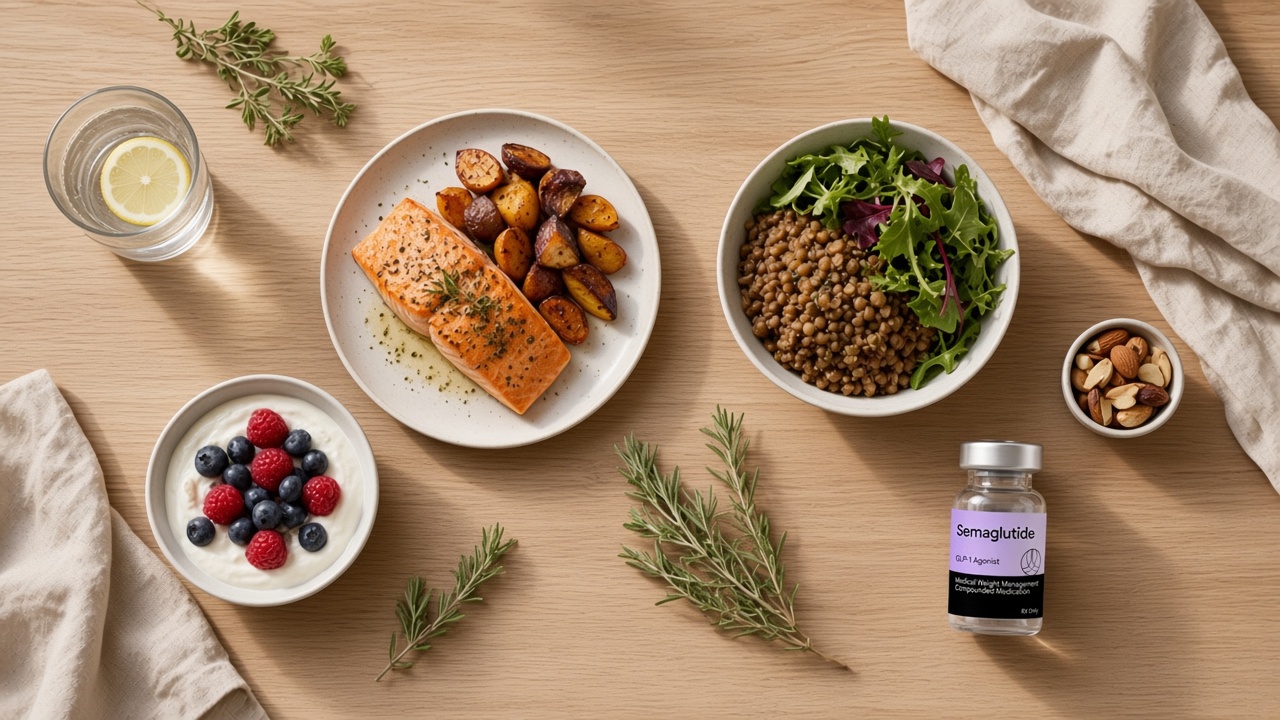
You do not need a branded “GLP-1 diet.” You need an eating pattern that helps you get enough protein, fiber, fluid, and nutrients even when your appetite changes. Smaller portions and slower meals are often more comfortable because digestion may feel different.
The goal is not to eat as little as possible. Regular nourishment supports energy, strength, digestion, and day-to-day consistency. Your provider or a registered dietitian can adjust the plan for your medical history, preferences, culture, and budget.
Start with the complete GLP-1 weight loss guide for medication basics. You can browse additional topics in the Learn hub and weight loss section.
Do you need a special GLP-1 diet?
No single menu fits every person. A practical plate often includes a protein source, vegetables or fruit, and a carbohydrate you tolerate. Add fats in moderate amounts. Your portion may be smaller than before, so choose foods that bring useful nutrition without requiring a large volume.
Rigid rules can backfire. Eliminating entire food groups without a medical reason can make meals harder to sustain and may reduce variety. Instead, notice how portion size, meal timing, richness, and eating speed affect comfort.
If you have kidney disease, diabetes, digestive conditions, food allergies, a history of disordered eating, or another nutrition-related concern, ask for individualized guidance before making large changes.
How can you prioritize protein?
Include a protein source when you eat. Options may include eggs, poultry, fish, lean meat, Greek yogurt, cottage cheese, tofu, tempeh, beans, or lentils. Choose what fits your preferences and what your body tolerates.
When appetite is low, eat the protein portion early in the meal rather than saving it for last. A smaller option such as yogurt, an egg, or a simple smoothie may be easier than a large plate. Check added sugar and serving size rather than assuming every product labeled “protein” is a good fit.
Your ideal amount depends on body size, activity, kidney health, and overall intake. A provider or dietitian can help you set a realistic target without turning every meal into a calculation.
What role do fiber and fluids play?
Fiber supports digestion, but more is not always better overnight. Increase it gradually. Vegetables, fruit, beans, oats, whole grains, nuts, and seeds can contribute, depending on what you tolerate.
Drink fluid regularly as you add fiber. Too much fiber with too little fluid may worsen discomfort or constipation. Your fluid needs vary based on climate, activity, body size, health conditions, and other medications, so ask your provider if you need a specific target.
Watch urine color, thirst, dizziness, and bowel patterns as practical clues, but report concerns rather than trying to diagnose dehydration yourself. Repeated vomiting or diarrhea can change fluid needs quickly.
How often should you eat when appetite is lower?
Many people find that smaller, regular meals are easier than one or two large ones. Long gaps can leave you under-fueled and may lead to eating quickly when hunger returns. A simple structure of meals plus an optional snack may be enough.
Use a schedule if hunger cues become quiet. You do not need to force a large portion, but you should pay attention to whether you are consistently missing protein, fluids, and other nutrients. Persistent inability to eat deserves a message to your provider.
Keep easy options available for busy days: yogurt, eggs, tuna packets, cut vegetables, fruit, soup, beans, or leftovers in small portions. Convenience can be part of a balanced plan.
Which foods may feel harder to tolerate?
Large, fried, greasy, or very rich meals can feel uncomfortable when digestion is slower. Very spicy foods, alcohol, carbonated drinks, and strong odors may also worsen nausea or fullness for some people. Tolerance is individual.
Do not create a permanent banned-food list after one uncomfortable meal. Consider the portion, eating speed, dose timing, and what else you ate that day. Try a smaller amount later if your provider agrees and if the reaction was not allergic or otherwise serious.
Alcohol can affect hydration, judgment, and food choices. It may also interact with health conditions or other prescriptions. Ask your provider whether you should avoid it.
What can you eat when nausea appears?
Small, simple, lower-fat meals may feel easier. Options could include toast, crackers, rice, oatmeal, broth-based soup, banana, applesauce, eggs, yogurt, or another food you already know you tolerate. Eat slowly and stop before you feel overly full.
Sip fluid between meals if drinking a lot with food increases fullness. Cool or room-temperature foods may have less odor than hot meals. Ginger appeals to some people, but supplements and concentrated products can interact with medication, so ask before using them.
If nausea is persistent, worsening, or keeping you from eating and drinking, contact your care team. The GLP-1 side-effects guide explains what details to report.
How can you plan meals without overcomplicating them?
Choose two or three breakfasts, lunches, and dinners you can repeat. For example: eggs with toast and fruit; yogurt with oats and berries; chicken, rice, and vegetables; bean soup with a simple salad; or fish with potatoes and greens.
Cook protein and a grain in batches, then add frozen or fresh vegetables. Keep portions modest and save leftovers before you start eating if a full plate feels overwhelming. Use sauces and fats in amounts that feel comfortable.
Plan around real life. A lower-cost grocery list and repeatable meals are more useful than an expensive plan you abandon after a week. Your meals do not need to look perfect on social media.
How should you eat around injection day?
There is no universal injection-day menu. If you notice symptoms at a predictable time after the dose, plan smaller, familiar meals and keep fluids available. Avoid testing a very rich restaurant meal when you know nausea often appears.
Use the same injection day each week unless your provider instructs otherwise. Record dose timing, meals, and symptoms for a few weeks. A pattern can help you plan and gives the care team useful information.
If you are unsure about injection technique or site rotation, read the step-by-step GLP-1 injection guide. Medication instructions should still come from your pharmacy and provider.
What should you know about compounded medication programs?
Transparent Meds may offer compounded semaglutide at $99 per month and compounded tirzepatide at $199 per month. These medications are compounded by a state-licensed 503A pharmacy. They are not FDA-approved. Prescription required.
Your prescription and pharmacy label determine the medication, concentration, dose, and schedule. Do not copy another person's meal or dosing routine. Individual history, symptoms, and instructions differ.
Tell your provider about all prescriptions, supplements, allergies, digestive conditions, kidney concerns, pregnancy or breastfeeding, and any history that affects eating. Nutrition advice should fit the same health information used to make medication decisions.
How can you tell whether you are eating enough?
Look beyond hunger. Ongoing fatigue, dizziness, weakness, reduced exercise tolerance, constipation, dark urine, or difficulty concentrating may be reasons to review food and fluid intake with your provider. These symptoms can have other causes, so do not self-diagnose.
Track meals for a few ordinary days if your care team asks. A brief record can show whether protein, fluids, produce, or overall intake is regularly missing. Avoid turning tracking into constant judgment.
The GLP-1 timeline guide covers useful observations during the first months. Your provider may also recommend lab work or dietitian support based on your history.
What is the simplest way to start?
Build your next meal around one protein, one produce item, one carbohydrate, and a drink. Eat slowly. Stop at comfortable fullness. Repeat with foods you enjoy and can afford.
Make one adjustment at a time so you know what helps. Keep fluids visible, prepare smaller portions, and have a few simple foods ready for lower-appetite days. Ask for help before symptoms make eating difficult.
You can review Transparent Meds weight loss options and pricing if you are considering a provider evaluation. Food habits and medication decisions should work together as one monitored plan.
How can you handle restaurants and social meals?
Review the menu in advance and choose a protein-centered meal with a side you usually tolerate. Consider an appetizer-sized portion, split an entrée, or ask for a takeout container early. You do not need to explain your prescription to anyone at the table.
Eat slowly and pause before ordering more. Rich sauces, fried items, large portions, and alcohol may feel different than they did before. If you want one of those foods, a smaller amount may be more comfortable than avoiding the event or trying to finish a full serving.
Do not skip earlier meals to “save room.” Arriving extremely hungry can make slower eating and portion awareness harder. Keep the social part of the meal in focus, take leftovers home, and return to your usual pattern at the next meal without punishment or compensation.
Prescription required.
Frequently asked questions
Do you need a special diet while taking a GLP-1?
There is no single required diet. Smaller balanced meals, enough protein, gradual fiber, and steady fluids are practical starting points.
Why does protein matter?
Protein supports muscle and can help make smaller meals more substantial. Your appropriate amount depends on your health history and overall eating pattern.
What foods may worsen nausea?
Large, fried, very rich, spicy, or strongly scented meals may feel harder for some people. Individual tolerance varies.
How can you eat when appetite is low?
Use small regular meals and prioritize foods with protein and nutrients. Tell your provider if you cannot eat or drink enough.
How much water should you drink?
Fluid needs vary with your body, activity, climate, and health conditions. Sip regularly and ask your provider for a personal target.
Keep learning

Transparent care
Talk to a licensed provider
See whether the weight loss program may fit your goals, then review pricing before you decide. Prescription required.
View program details