
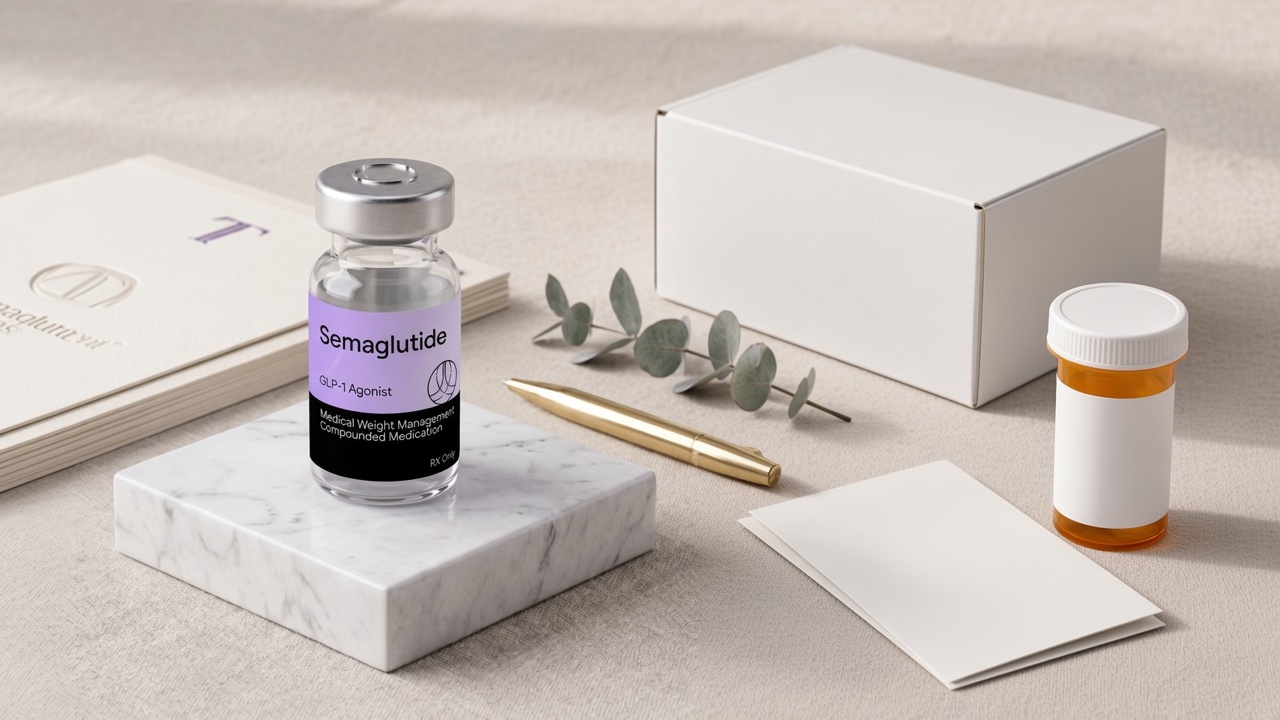
“Compounded” describes how a medication is prepared; it is not a brand name. A compounded medication is made by a compounding pharmacy for an individual prescription. It is not a generic product reviewed as equivalent to a brand-name medication.
That difference affects what you should ask about sourcing, concentration, labeling, storage, and instructions. It also explains why a compounded vial may not match a brand-name pen or another pharmacy's vial.
For a broader overview, read the complete GLP-1 weight loss guide. You can find more educational content in the Learn hub and weight loss section.
What is a compounded GLP-1 medication?
A compounding pharmacy prepares medication for an identified patient based on a valid prescription. A licensed provider must decide that a prescription is appropriate and send it to the pharmacy.
The medication may arrive in a vial with separate syringes rather than a prefilled pen. The label should identify the active ingredient, concentration, directions, pharmacy, storage requirements, and beyond-use date.
Compounding can meet an individual prescription need, but it does not create a generic version of a brand-name product. Formulation, concentration, packaging, and administration can differ. You should understand exactly what has been dispensed before using it.
What does “state-licensed 503A pharmacy” mean?
Section 503A refers to a part of federal law that describes conditions for traditional pharmacy compounding. A 503A pharmacy generally compounds for identified patients based on valid prescriptions and operates under state pharmacy oversight along with applicable federal requirements.
The phrase is useful, but it should not end your questions. Ask for the pharmacy's legal name and state. You can look up a license through the relevant state board of pharmacy and review any public disciplinary information.
Also ask who to contact with questions about the vial, storage, shipment temperature, concentration, or a product concern. A program should not hide the dispensing pharmacy behind a generic customer-service inbox.
How is a brand-name product different?
A brand-name product has a specific manufacturer, formulation, delivery device, labeling, and regulated review history. Its pen or vial instructions apply to that exact product. A compounded medication is prepared separately and does not share that product review.
This means you should not use a brand-name pen tutorial to measure a compounded vial. You should not assume the inactive ingredients, concentration, storage window, or missed-dose instructions are identical.
Brand-name and compounded access can also differ by insurance, supply, pharmacy network, and cash price. Your provider can discuss clinical fit, while your insurer and pharmacy can explain current coverage and availability.
Do compounded medications receive an FDA product review?
No. Compounded medications are not FDA-approved. The FDA does not review a compounded product for safety, effectiveness, or quality before it reaches a patient.
That disclosure should be stated clearly rather than buried in a footer. It does not tell you whether a specific prescription is appropriate. That decision belongs to a licensed provider who reviews your health history and the available options.
It also does not remove the need for pharmacy oversight, accurate labeling, proper storage, and a way to report concerns. Ask the program to explain its pharmacy relationship in plain language.
How can you evaluate a compounded GLP-1 source?
Start with the pharmacy. Confirm its name, state license, contact information, and role in answering medication questions. Check that the package and label match what your provider prescribed.
Review the active ingredient and concentration. Be cautious when a seller uses vague language, does not identify what is in the vial, or suggests that every compounded product is identical. Avoid websites that ship without provider review or sell loose vials with no patient-specific label.
Ask how the program handles temperature excursions, damaged seals, unexpected appearance, recalls, and adverse-event reports. Credibility shows up in the process, not in claims such as “pharmacy grade.”
Why do concentration and syringe units matter?
Milligrams describe the medication amount. Syringe units describe liquid volume. Concentration connects the two. If the concentration changes, the same number of syringe units can deliver a different milligram dose.
That is why social-media dosing charts are risky. A chart may refer to a different pharmacy, concentration, syringe size, or medication. Even a previous vial from your own program may have different directions after a dose or formulation change.
Ask the pharmacy to confirm the prescribed milligrams, concentration, and matching syringe units together. The GLP-1 injection guide explains label checks and injection basics.
How do compounded and brand costs compare?
Cash prices vary widely. Brand-name cost depends on insurance coverage, deductible, pharmacy network, manufacturer programs, and current availability. Compounded programs are often cash-pay and may bundle medication with online clinical care.
Transparent Meds lists compounded semaglutide at $99 per month and compounded tirzepatide at $199 per month. Ask whether the amount includes medication, shipping, supplies, provider review, and follow-ups, and whether it changes with dose.
The GLP-1 cost without insurance guide provides a checklist for comparing complete recurring costs rather than opening-month promotions.
What disclosures apply to Transparent Meds options?
Transparent Meds may offer compounded semaglutide and compounded tirzepatide. These medications are compounded by a state-licensed 503A pharmacy. They are not FDA-approved. Prescription required.
A licensed provider reviews your information before deciding whether either option is appropriate. Eligibility is not automatic. The provider may request additional information, decline to prescribe, or discuss a different plan.
If prescribed, read the pharmacy label and accompanying instructions before the first dose. Save the pharmacy contact information and keep the medication in its original labeled packaging.
What health information should your provider review?
Give a complete list of prescriptions, nonprescription products, vitamins, supplements, and allergies. Discuss pregnancy, breastfeeding, planned procedures, digestive conditions, kidney concerns, gallbladder history, and relevant personal or family endocrine history.
Share previous experiences with weight-management medication, including side effects and why you stopped. Do not leave out information because you think it may affect eligibility. The purpose of review is to make a careful decision.
The semaglutide versus tirzepatide guide explains why active ingredient and pathway differences also belong in the conversation.
Which warning signs should make you pause?
Pause when a website offers medication without a prescription, refuses to name the pharmacy, labels a compounded product as identical to a brand, or provides no concentration-specific instructions. Countdown timers and promised outcomes are also poor signs.
Do not use a vial that lacks your name, has a broken seal, looks unexpectedly different, or arrived outside the required temperature range. Contact the pharmacy before injecting it.
Be cautious with add-ons that are not clearly identified or explained. You should know every active and inactive ingredient in the dispensed formulation and why it is present.
What should you ask before choosing an option?
Ask your provider why a compounded or brand-name option is being considered for you, what alternatives exist, how follow-up works, and which symptoms require contact. Ask the program for complete recurring pricing and cancellation terms.
Ask the pharmacy about the active ingredient, concentration, storage, beyond-use date, injection supplies, and what to do after a missed dose. Write down the prescribed amount in both milligrams and syringe units when applicable.
You can review Transparent Meds weight loss program information when you are ready. A clear explanation of product type, pharmacy source, price, and provider oversight should come before payment.
What is the plain-language takeaway?
A compounded GLP-1 and a brand-name product may involve a related active ingredient, but they are not the same product. Different review status, formulation, concentration, packaging, and instructions make careful labeling and pharmacy transparency essential.
Compounded options should always come through a valid prescription and an identifiable pharmacy. You should know what you received, how to use it, how much the complete program costs, and whom to contact.
The word “compounded” is not enough information by itself. Ask specific questions and expect specific answers.
Why should you verify the active ingredient and additives?
Read the label for the full active-ingredient name rather than relying on a website headline. Ask the pharmacy to explain the formulation, including any added ingredient, in plain language. You should know what each component is and why it is included.
Tell the provider and pharmacist about allergies and previous medication reactions. Do not assume that a vitamin or another add-on makes a product more appropriate for you. An add-on may change the formulation without changing the need for a careful prescription review.
If the label does not match the prescription or the program description, pause before using the vial. Contact both the pharmacy and care team, keep the packaging, and document the lot information. Clear identification is a basic requirement, not an optional detail.
Prescription required.
Frequently asked questions
Is compounded semaglutide the same as a brand-name product?
No. A compounded medication is prepared for an individual prescription and is not reviewed as a generic equivalent to a brand-name product.
What does a 503A pharmacy do?
A state-licensed 503A pharmacy compounds medication for identified patients based on valid prescriptions and is subject to applicable state and federal requirements.
Are compounded GLP-1 medications FDA-approved?
No. Compounded medications are not FDA-approved, and the FDA does not review them for safety, effectiveness, or quality before use.
What should be on a compounded medication label?
Check for your name, active ingredient, concentration, dose directions, pharmacy information, storage instructions, and beyond-use date.
Why can syringe units differ between compounded products?
Syringe units measure liquid volume. Different concentrations can place different medication amounts in the same volume, so you must use your own label.
Keep learning

Transparent care
Talk to a licensed provider
See whether the weight loss program may fit your goals, then review pricing before you decide. Prescription required.
View program details